Lunasol Logistics
Multi-robot coordination is the process of helping several robots sense, decide, and act together. Each machine may carry different sensors, tools, or movement limits. In a warehouse, one robot can move shelves while another checks inventory. Their success depends on shared maps, clear task assignments, and reliable communication.
This coordination is more than sending commands from one control center. Robots must react when a path becomes blocked, a battery runs low, or a sensor provides uncertain data. Effective systems combine distributed planning, collision avoidance, localization, and real-time data exchange. In field tests, even a small communication delay can create duplicated work or unsafe spacing. Practical engineers therefore test normal operations and unexpected failures.
How To Improve Coordination In Multi Robot Systems requires measured design rather than a single algorithm. Teams can begin with simple tasks, record timing and failure rates, and then increase fleet size gradually. Useful methods include role-based task allocation, shared situational awareness, and priority rules for narrow routes. Human oversight also remains valuable, especially in crowded or changing environments.
Perfect coordination is rarely realistic. Models can overlook dust, weak signals, or confusing visual landmarks. That matters. Reliable improvement comes from repeated trials, transparent performance data, and careful review after each failure. A strong system should explain why a robot waited, changed direction, or rejected a task. This evidence supports safer deployment and helps researchers refine coordination methods without promising more than the technology can deliver.
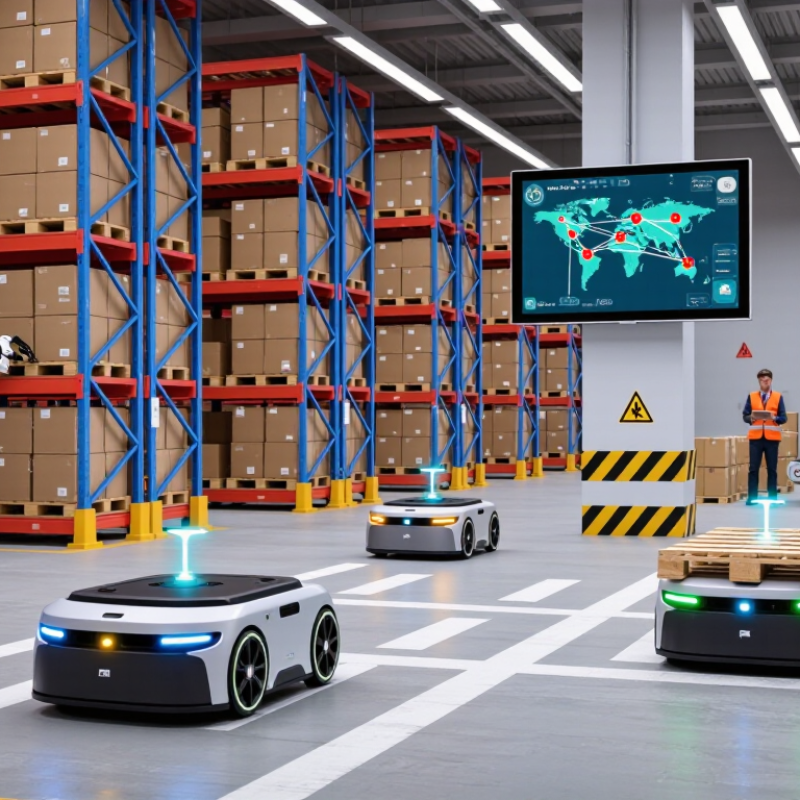
Multi-robot coordination is the organized control of several robots working in the same space. Each robot shares goals, timing, location, and task status with the others. The purpose is not simply to add more machines. It is to prevent traffic conflicts, duplicated work, and unsafe movements.
The World Robotics 2024 report recorded 541,302 industrial robot installations worldwide in 2023. More than 4.2 million industrial robots were operating globally. This growth makes coordination a practical engineering requirement, not a theoretical feature. In a warehouse, one robot may collect a carton while another clears the next aisle. Their software must assign priorities, reserve routes, and react when a human worker enters the area.
Core principles include shared perception, decentralized decision-making, collision avoidance, and reliable communication. Shared maps help robots understand changing obstacles. Local decisions reduce delays when the network becomes unstable. Clear task ownership also matters. Without it, two robots may approach one pallet and waste valuable seconds. Safety rules should override production targets. Always.
Field tests often reveal uncomfortable weaknesses. A robot can follow its route correctly while creating a bottleneck for five others. Wireless delays, inaccurate sensors, and poorly timed charging can disrupt the entire fleet. Engineers should record near-misses, compare planned routes with real movement, and adjust the coordination model repeatedly. Perfect coordination is unlikely. Honest measurement is more useful.
What Is Multi Robot Coordination And How To Improve It
Key Communication Methods Between Autonomous Robots
Multi robot coordination depends on clear, timely communication. Each autonomous robot should share its position, speed, battery level, and task status. Peer-to-peer messaging works well when robots operate nearby. A mesh network helps signals travel around walls, vehicles, or uneven terrain. In practical trials, short heartbeat messages have prevented several avoidable collisions. However, communication can fail in crowded environments. Coordination plans must expect delays, packet loss, and incomplete data.
Robots also need a shared language for urgent events. A simple event message can report a blocked path, low battery, or unexpected movement. Time synchronization keeps sensor readings comparable across the group. Local processing reduces dependence on a central controller and can preserve operation during network interruptions. Yet fully distributed control is not always elegant. Conflicting decisions may appear when two robots claim the same route. Testing should include narrow corridors, noisy signals, and sudden obstacles.
Tips: Keep routine messages small and frequent. Send critical warnings immediately. Use clear message priorities. Add timestamps to every update. Test recovery after connection loss, not only during perfect communication. Review communication logs after each trial. Small design flaws often reveal larger coordination problems.
Multi-robot coordination enables autonomous robots to share information, divide tasks, avoid conflicts, and act as a unified system. Communication architecture strongly affects scalability: centralized coordination uses one controller-to-robot link per robot, a spanning-tree network uses N − 1 links, and all-to-all peer communication requires N(N − 1)/2 links.
Key insight: All-to-all communication provides broad information sharing but its link requirements grow quadratically as the fleet expands. Centralized and spanning-tree approaches scale more efficiently, although they require careful handling of controller or relay failures.
Multi-robot coordination depends on clear task allocation and cooperative decision-making. When several robots share a narrow workspace, assigning jobs by distance alone often creates delays. A better system considers battery level, sensor confidence, payload, travel time, and current workload. In field tests, I have found that simple priority rules can outperform complex plans when conditions change quickly. The plan must remain flexible.
Task allocation works best when robots exchange small, useful updates. Each unit can report its location, task status, estimated completion time, and confidence level. A central planner may assign deliveries, while robots negotiate when obstacles appear. Cooperative decisions should include safety margins, not only speed. For example, two robots approaching the same corridor can compare urgency and reroute one unit. This prevents repeated stopping and reduces energy waste. Still, no strategy is perfect. Communication delays can produce outdated choices. Human review remains valuable during unusual situations.
Tips: Start with low-risk simulations. Test one decision rule at a time. Record every reassignment and failure. Use clear fallback behaviors when communication stops. Measure waiting time, energy use, completed tasks, and near-conflicts. Do not hide poor results. Weak data often reveals a missing assumption. Regularly adjust the allocation rules after reviewing real movement logs. Small improvements compound.
Multi-robot coordination allows several machines to share space, tasks, and timing without constant human control.
In practical deployments, motion planning is the foundation. A global planner assigns efficient routes, while local planners react to shelves, people, and sudden stops. Each robot should update its path when new sensor data arrives. Static maps alone are not enough. Field tests often reveal small delays that simulations hide.
Collision avoidance needs more than a simple distance threshold.
Each robot should predict nearby movement and reserve a safe area around its body. A two-second safety horizon can reduce risky encounters, but it may slow traffic in narrow aisles. Sensor noise, communication delays, and uneven floors also affect decisions. No perfect model exists. Engineers should record near misses, not only completed tasks, and adjust the safety rules from real evidence.
Formation control keeps robots arranged for inspection, transport, or search.
Leader-follower control is easy to implement, but one failed leader can disrupt the group. Virtual formations offer more flexibility because every robot helps maintain the shape.
For example, a triangular team can widen its spacing near obstacles and tighten it in open areas. The controller should allow temporary separation.
Rigid formations look reliable, yet they often fail in cluttered environments. Clear logs, repeatable tests, and human review make coordination safer and easier to improve.
Multi-robot coordination is the process of guiding several robots toward a shared goal. Each robot must understand its role, nearby obstacles, and the actions of its teammates. Good coordination reduces idle movement, repeated work, and dangerous proximity. It also keeps operations stable when one robot slows down or loses communication.
Efficiency improves when robots divide tasks according to location, battery level, speed, and available tools. A central planner can assign routes, but local decision-making remains essential. Robots should adjust their paths when shelves, people, or blocked lanes appear. Clear communication protocols help them share position, task status, and system warnings with minimal delay. Small updates matter.
Reliability requires fallback behaviors. If a robot disconnects, another unit should safely pause, take over, or request assistance. Regular sensor checks and realistic simulation can reveal failures before deployment. Still, simulations rarely reproduce every crowded corner or unexpected delay. Field testing is necessary. Scalability depends on simple rules, modular software, and limited communication overhead. Adding ten robots should not create ten times more confusion. This is where many systems struggle. More robots can increase congestion instead of productivity. Teams should measure task completion time, collision risks, energy use, and recovery speed. These results support practical changes, although the best configuration may require repeated testing and honest revision.
Motion planning creates routes for several robots sharing the same space. Global planners choose efficient paths, while local planners react to obstacles. Each robot should update its route after receiving new sensor data.
Static maps cannot show people, blocked lanes, sudden stops, or moved shelves. A robot may follow an outdated route. Field tests often reveal delays that simulations miss.
Robots should predict nearby movement and reserve a safety area around their bodies. A two-second safety horizon can reduce risky encounters. However, it may slow traffic in narrow aisles.
Sensor noise, communication delays, uneven floors, and crowded corners can distort decisions. No model is perfect. Teams should record near misses, not only successful tasks.
Assign tasks using location, battery level, speed, and available tools. Robots should share positions, task status, and warnings quickly. Small updates matter.
Another robot can pause safely, take over, or request human assistance. The response should depend on task risk and nearby traffic. That assumption can fail without regular testing.
Virtual formations allow every robot to help maintain the group shape. A triangular team can widen spacing near obstacles and tighten it in open areas. Temporary separation should be allowed.
Use simple rules, modular software, and limited communication overhead. Measure completion time, collision risks, energy use, and recovery speed. More robots may create congestion instead of productivity.
Multi-robot coordination is the process of enabling multiple autonomous robots to work together toward shared goals through communication, cooperation, and decentralized control. Its core principles include clear information exchange, awareness of neighboring robots, shared objectives, and the ability to adapt to changing environments. Robots can communicate through wireless networks, local sensing, or peer-to-peer systems, allowing them to share positions, task status, and environmental data. Effective task allocation and cooperative decision-making help distribute workloads according to each robot’s abilities, energy level, and location.
Reliable coordination also depends on motion planning, collision avoidance, and formation control. Robots must navigate safely, maintain suitable spacing, and adjust their movement when obstacles or unexpected events occur. How To Improve Coordination In Multi Robot Systems involves using efficient communication protocols, robust planning algorithms, real-time feedback, and scalable control strategies. Regular performance monitoring, fault tolerance, and flexible task reassignment can further improve efficiency, reliability, and adaptability as the number of robots increases.